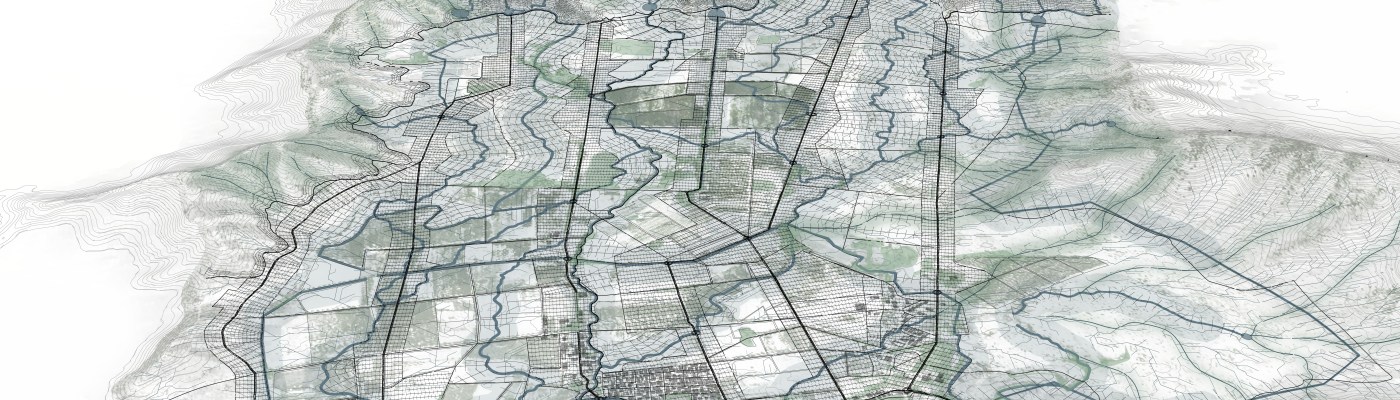


Santiago´s metropolitan area is experimenting an expansion which generates a development pressure over the natural areas. The project delves into specific physical, environmental and social conditions and their implications on future expansion towards the fringes.
The project unveils the existing hydrological structure, reinterpreting it to create a dendritic pattern of ponds and canals that harvest and divert the water along the flatlands, contributing to create a more resilient landscape. In the highlands this canals shift into natural corridors that enhance the ecological values of the site.
The strategy pretends to enhace the agricultural character of the lowlands enabling the fields to receive a constant amount of water. Water spines reshape the existent agricultural plots informing the way in which the urban expansion takes place.
The open city plan enables the creation of diversified collective spaces, flexible installations, and mixed used buildings. The urban tissue is broken, creating plazas that stretch for the agriculture areas. This approach aims at enhacing a sense of communal space thanks also to alternative ways of production such as rooftop gardens and shared management green houses. Agriculture is therefore produced on site and locally consumed.
The contaminated soil is remediated by forest implementation and the existing mines are recovered into different landscape catalysts. Open mines are converted into small lakes which become key leisure basins where people could enhoy canoeing, swimming and birdwatching, or fauna conservation spots which are connected through walking paths and a funicular system deployed across the site.
The project aims to be understood as a system that can be reapplied along the different fringes of Santiago, envisioning a possible scenario for the expansion of the city towards a sustainable growth of interactions with the surrounding landscape. The Fringe System is conceived as an open process that would evolve over time accordingly to the different variations that the territory could experiment through time. Fundo San Francisco becomes a potential site to test new modes of urbanisation.


Team: Silvia Ribot, Elena Longhin.
 silviaribot.com